Sunday, October 7, 2012

Best of my Japan-Related Tweets for Week of October 1

-->

Photo by: Plus/Minus
 * Brooklyn Synth-pop band Chairlift taps childhood memories of Japan for inspiration | The Japan Times http://ow.ly/efRlw
I was doing songs with my band way back in the 1980s in Japanese. I’m glad to see some foreigners are still doing this. I agree that the Japanese version is better than the English. Catchy song!

* Sometimes all you need is a little Pink Lady to brighten your day: http://ow.ly/egXSt [oooooooh....WANTED!]
I didn’t get into J-pop until the 1980s idol period (Nakamori Akina, Matsuda Seiko, etc.), but I do love me some 1970s Pink Lady. I’d never seen a live performance of this song ("Wanted") and it’s one of my favorites by the dynamic duo. And I love those funny voices they do in the middle!

* What are the most popular TV shows in China, India, Germany, Japan, India, the UK and Italy? http://ow.ly/efQFe
Now that we have YouTube we can see a lot of international TV that you’d never have the chance to watch unless you were abroad. And I’ll be you can find some clips of these if you try (though probably not the latest UK season of Downton Abbey!).

* Got Nihongo? NHK WORLD offers free Japanese lessons online: http://ow.ly/ebLaR
There’s really no excuse not to study a foreign language with all the resources available on the Internet!

* Japanese study says kawaii puppies and kittens make workers more productive - http://ow.ly/e7Er1
We’ve had to know there’s been some method to the madness of kawaii-mania that’s been a staple of Japan for years!

* If you're like me and can't make it to Tokyo right now, you can live vicariously via Style-Arena Japan: http://ow.ly/efBpX
I love looking at the street fashion on this site!

* Do Americans care more about fairness than the Japanese? Daily Yomiuri - http://ow.ly/e7EXL
Studies conducted on Japanese and Americans on what constitutes “fairness” are revealing.

Thursday, September 13, 2012

Expat Women in Asia: Call for Submissions


Editor Shannon Young is seeking contributions from expatriate women in East Asia for a new anthology from Hong Kong’s Signal 8 Press. The collection will feature the writing of women who are currently expatriates or who have previously lived in an East Asian country. For the purposes of this anthology, this includes Korea, China, Japan, Taiwan, Hong Kong, Macau and the ASEAN countries. All submissions should be creative non-fiction and/or travel memoir pieces that speak to the expat experience in modern East Asia. Potential topics include travel, work, relationships, gender roles, safety, family and repatriation. Stories should have a strong and personal narrative arc, not just travel guides or descriptions of the places where the writer has lived. The anthology strives to be as inclusive as possible and welcomes submissions from women from different parts of the world.
Submissions should be between approximately 2000 and 5000 words in length. Each writer will receive two copies of the completed anthology and a percentage of the royalties to be determined by the final number of contributors. Please send all submissions, with a brief paragraph about the author to Shannon [at] typhoon-media [dot] com. Submissions should be in Microsoft Word, .doc or .docx format, and in a standard font. The deadline for submissions is February 28, 2013. The anthology will be released in paperback and e-book formats in the spring of 2014.

Thursday, June 21, 2012

MY "STRONG BEGINNINGS" CLASS AT BOOK PASSAGE - 7/28

I’m teaching another one of my “Strong Beginnings” classes on Saturday, July 28 from 10:00 am to 3:00 pm at Book Passage Corte Madera! This class is geared toward all levels of writers who are working on novels. Memoir and creative non-fiction writers will also find it helpful.

Making a good impression in the first five pages is crucial for the success of your novel, whether you want to keep a reader reading or are hoping to get an agent to offer representation. Common mistakes include starting the story in the wrong place, giving too much backstory or using an action scene that serves no purpose. In this class, we do what’s called a close reading of first chapters of a variety of successful published books. We analyze all the elements (pacing, characterization, style, tone, voice, structure, etc.) to understand what grabs a reader. Then we take a look at the first five pages of students' novels to see what works and what needs improvement.

Over the years, students have responded quite positively to this class, citing its practicality and usefulness as opposed to other creative writing classes that emphasize more abstract concepts that can’t always be applied to a student’s specific work. And the things you learn in this class can also help you with revising your entire novel.

Looking forward to seeing you there! You can sign up here:

Wednesday, June 13, 2012

His Wife and Daughters is FREE on Amazon!

Kirkus Reviews says about my novel, His Wife and Daughters: “A refreshing narrative with a strong sense of place: political scandal with an interesting twist that hits the mark.” And you can download it for free on Amazon as a Kindle ebook or read it on the free Kindle app on your iPad, iPhone, Mac, PC, etc. through Friday, June 15 by clicking HERE


More on His Wife and Daughters:


It’s 1988 and Trina Brath and her teenage daughters, Jill and Phoebe, lead happy and privileged lives as the wife and daughters of successful California Congressman Dan Brath. But that all changes when Dan, 52, is suspected of having an affair with Lesley Chisholm, a 19-year-old Washington DC intern who has gone missing. Soon Dan Brath is being accused in the harsh media spotlight of not only sleeping with Lesley Chisholm, but responsible for her disappearance. Despite Trina’s standing by her husband—yet keeping the secret that he has cheated on her many times before—the incessant media scrutiny puts a strain on the family, and their lives to go into a tailspin. Eight months later, when Lesley mysteriously returns home safe and sound, Dan Brath’s career is over, and his family is in tatters.

Fast forward to today and the scandal that rocked the Brath family continues to take its toll. Jill has food issues and can’t trust men, Phoebe leads a self-destructive life and Trina continues to blame Lesley Chisholm for everything. And now Lesley is breaking her silence with a tell-all memoir, which is sure to make Dan Brath’s wife and daughters relive the trauma all over again. Will Jill, Trina and Phoebe be able to cope, heal their wounds and move on with their lives? Told from the viewpoints of the three women, His Wife and Daughters is a moving story of how one family attempts to survive the ultimate betrayal.

Monday, April 23, 2012

"Falling Uphill" Ebook is FREE on Amazon!


Just wanted to let you know that my chick lit mystery e-book "Falling Uphill" is free through Friday, April 27 on Amazon HERE!

Please spread the word!

And here's the blurb:

“Falling Uphill” by Wendy Nelson Tokunaga

“Ruth Fenton is dead, but what does that have to do with me?” That’s what Candace Grey, 29, wants to know after receiving a puzzling phone message from San Francisco. A bright, but slightly absent-minded anthropology teacher at a small Michigan college, Candace is all set to leave for Los Angeles to conduct research on 1960s TV star Pamela Parrish—America’s Sitcom Sweetheart—for her Master’s thesis on television and female gender roles. But after discovering that Ruth Fenton is a long lost relative, she’s first off to San Francisco for her memorial service where she meets a crazy(?) old lady who claims Pamela Parrish didn’t commit suicide like everybody says—she was murdered. Now Candace has to get to the bottom of it, all while fighting the nagging feeling that her long-time professor boyfriend back home is getting a little too close to one of his students, and at the same time wondering if new-found friend Brandon, a newspaper reporter and budding painter who lives on a hidden stairway street in the hills of San Francisco, is really the guy for her. It’s a funny, but moving, uphill climb for Candace who finds that things are rarely what they seem in the ups and downs of love or in discovering a surprising secret about her not-so-perfect mother, or unearthing the truth behind the death of America’s Sitcom Sweetheart.

Monday, February 20, 2012

My Short Story, "Love Right on the Yesterday"

I'm so pleased that my short story, Love Right on the Yesterday about a Japanese teenager who longs to be an idol singer, was selected to be a part of Tomo: Friendship Through Fiction—An Anthology of Japan Teen Fiction edited by Holly Thompson.

Tomo will be published on March 10, 2012 and proceeds from all sales will go to organizations that are helping teens in the quake and tsunami hit areas. Tomo, which means friend in Japanese, aims to bring Japan stories to young adult readers worldwide as well as help support teens in Tohoku.

You can pre-order a copy of Tomo HERE. And you can read interviews with the contributors at the Tomo Blog Site.

But that's not all...I'm also thrilled that my story was selected to be published on YARN, the Young Adult Review Network, to give readers a sneak preview of Tomo. So I hope you'll check it out!

Saturday, February 11, 2012

How J-Drama "Marumo no Okite" Improves My Rusty Ear


I’m dusting off the cobwebs of this blog and hoping to be more active again. I’ve got a lot going on in my crazy writing life, but will do my best to ganbarimasu!

Recently my husband granted me the wish of a subscription to TV Japan through Comcast Xfinity. Way back in the day when I was first studying Japanese (in the ancient times of no Internet and when VHS was the ultimate in high tech), I relied a lot on a local San Francisco station, Channel 26, that broadcasted Japanese programming mainly on weekends, to help with hearing real Japanese. There was a time when you could catch a wide variety of Japanese TV shows on Channel 26, some with English subtitles, and it was a great help in training my ear to Nihongo.

But as the years passed and the demographics in San Francisco started shifting, Channel 26 began to strip away its Japanese programming in favor of Mandarin and Cantonese language shows. The pickings became slim and with the advent of TV Japan, I now understand that many of the expats or temporary expats in the Bay Area weren’t watching Channel 26 anymore. And with the advent of TV Japan I’m assuming it was harder and harder for the station to attract Japanese sponsors.

With TV Japan I’m back on track and I can hear Japanese 24/7 if I want to. This helped tremendously when I found myself in Osaka last month, my first time visiting Japan in more than five years and by far my longest break from one of my favorite places in the world. My ear wasn’t as rusty as it usually is and I also felt “in tune” with Japan since I was much more aware of what was going on, thanks to steady viewing of TV Japan at home.

I want to urge those of you studying Japanese to try and immerse yourself in the language as best you can. And these days with the Internet, DVDs, cable TV, etc., etc. there’s really no excuse—even if you live thousands of miles away from Tokyo you can still get an earful.

One of the best ways to improve your Japanese, I think, is by watching Japanese TV dramas. On TV Japan I’ve been watching one called Marumo no Okite. TV Japan mostly shows up-to-the-minute NHK shows, but has recently started offering other programming. Marumo no Okite originally aired on Fuji TV last spring, but it’s new to me so I don’t mind if it’s a bit old.

If Marumo no Okite were an American TV show, I wouldn’t watch any more than five minutes of it. It’s sappy and sentimental, about a young salaryman (Sadao Abe) who unexpectedly must take in his old baseball team buddy’s two kids when the friend dies suddenly. The children (Mana Ashida and Fuku Suzuki) are precocious and much too perfect (though they don’t mug for the camera as much as some American child stars) and there’s also a talking dog. Sheesh!

But I’m not expecting Downton Abbey here. I like that Marumo is predictable and sentimental and repetitive because that makes it much easier to understand when you don’t have any English subtitles on which to rely (another good strategy to help you improve). It’s also good to notice how the Japanese changes when a character is talking to his family, to his boss, to his customer and to a stranger. If you observe enough, you’re bound to pick up a lot. And if you find yourself understanding everything Mook the talking dog says you can reward yourself with a treat!


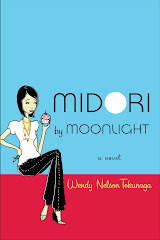
Wendy Nelson Tokunaga is the author of the novels, “Midori by Moonlight” and “Love in Translation” (both published by St. Martin’s Press), and the e-book novel, “Falling Uphill,” written under the pen name Kelly Sweetwood. She’s also the author of the nonfiction e-book, “Marriage in Translation: Foreign Wife, Japanese Husband.” Her short story, “Love Right on the Yesterday” appears in the upcoming book, “Tomo: Friendship Through Fiction: An Anthology of Teen Stories.”

Wendy holds an MFA in Creative Writing from University of San Francisco and teaches for Stanford University’s Online Writer’s Studio and for the MFA program at University of San Francisco. She also does private manuscript consulting for novels and memoirs. When she’s not busy writing, Wendy loves to sing jazz and Japanese karaoke with her Osaka-born surfer-dude husband accompanying her on keyboards. Follow her on Twitter at Wendy_Tokunaga and visit her website at: www.WendyTokunaga.com


Thursday, September 15, 2011

Viewed Sideways: New Book of Essays by Donald Richie


Whether you think you know Japan well or are an absolute beginner, you’re sure to both learn something new and be entertained by esteemed Japan scholar Donald Richie’s latest book of essays, Viewed Sideways: Writings on Culture and Style in Contemporary Japan, out now from Berkeley’s Stone Bridge Press. These 37 essays (including 26 anthologized for the first time) span 50 years, but all seem relevant and fresh in regards to 2011’s Japan.

Richie, who is a premier film critic, reviewer, novelist and essayist was born in Ohio in 1924 and has spent decades observing Japan, producing over 40 volumes of fiction and nonfiction, scores of essays and speeches, and hundreds of film, book and arts reviews. The writer Tom Wolfe has described him as “the Lafcadio Hearn of our time.”

The eclectic collection of writings in Viewed Sideways covers such diverse subject matter as Shinjuku sex shows, Kyogen drama, Japanese car culture, wasei eigo (Japanese/English), Buddhism, the fine art of pleasing and much more. Whether you read them in order or skip around, selecting those that strike your fancy, you’re sure to gain insight as well as probably recognize a thing or two that will give you many “yappari” (just as I thought) or “naru hodo” (now I see) moments

Richie is considered one of the world’s authorities on Japanese cinema and is an expert on the work of Yasujiro Ozu, one of my favorite filmmakers. I found particularly fascinating the seven essays in this collection about film, including the fine art of subtitling Japanese films (Richie is responsible for the English subtitles for the Akira Kurosawa films Kagemusha, Red Beard and Dreams). “All translation is a compromise,” he writes, “but I doubt that any translation is so thoroughly compromised as that of film dialogue subtitles. The translator is given only so much space and within it is supposed to render into writing spoken dialogue in the amount of time it takes to say it. This is impossible.”

Another fascinating point is when Richie recalls asking Japanese film director Shiro Toyoda why Japanese men were usually such poor actors and why Japanese women tended to be so much better. “He said it was only natural,” Richie writes. “The Japanese woman, from childhood, is forced to play a role. There are only three roles—those of daughter, wife and mother and she graduates from one to the other. From the earliest age she learns to mask her true feelings and to counterfeit what she does not feel. One of the results is that the Japanese woman is a consummate actress. Toyoda went on to say that he could take almost any female, put her up on the screen and she would do very well.”

Richie goes on to point out that women today in Japan are changing and growing and both their repertoire of social roles are expanding, which continues to help make some contemporary movies in Japan reflect these societal changes, and thus expanding Japanese cinema as well.

You’re sure to have your view of Japan enhanced by these elegantly written essays.

Get more info here on where you can purchase Viewed Sideways.
And visit the StoneBridge Press site for info on many wonderful books about Japan and Japanese culture.

Monday, April 11, 2011

Marriage in Translation: Foreign Wife, Japanese Husband


It took a while, but it's finally here -- yay! My e-book, Marriage in Translation: Foreign Wife, Japanese Husband is now available on Kindle! This book showcases interviews with 14 Western women who speak candidly about the challenges in making cross-cultural marriages work, both inside and outside Japan, and the joys and frustrations of adapting to a different culture. For the month of April, 50 percent of the proceeds will go to Japan Relief.

I want to give a special shoutout to my Japanese husband, Manabu Tokunaga, for all his technical help with this book (and the cover design!) as well as the great job he does of being my muse. :-) Arigato-sama!

Wednesday, February 16, 2011

Book Signings: An Endangered Species

There are different kinds of book signings. There are the ones where you go into the bookstore and sign copies of your books that they have in stock. Then there is the author event where you sign books at a table and sometimes give a reading beforehand. 

My very first stock signing was in the fall of 2007 at Stacey’s Books, a major independent store in downtown San Francisco where they featured my debut novel, Midori by Moonlight, in a lovely display. I was thrilled and signed each book with the Cross pen my husband had given me to celebrate my first published novel. 

A couple of hours later I was at my first author event at the huge Borders store in Union Square where I read from my novel, answered questions and signed copies—another major thrill I’ll never forget. 

Stacey’s closed a few years ago, a victim of Amazon and the big box stores. Borders has just filed for bankruptcy and the Union Square store (one of the largest in California) is on the closure list. Things are changing in the publishing world and more and more people are purchasing their books through Kindles and iPads. Book signings are an endangered species and are set to become extinct—a quaint memory from the past, much like the album signings by your favorite rock star at Tower Records.

Thursday, December 16, 2010

Japan, Funny Side Up by Amy Chavez


I’ve read a lot of guidebooks about Japan, but I’ve never encountered one like Japan, Funny Side Up by Amy Chavez. Chavez, the long-time “Japan Lite” columnist for The Japan Times (the country’s premiere English-language daily newspaper) has written a funny and insightful guide that not only gives readers excellent travel advice, but also offers valuable insights into Japanese culture and society.

Chavez keeps us laughing with essays like Etiquette Tips for Santa Claus and other Foreigners (“When you come inside the house—through the window, please—take off your boots and use the XXL slippers we’ve put out for your big gaijin feet.”) and Japan: A Nation Ruled by Cartoon Characters, which introduces such kawaii mascots perhaps not as well known to Westerners as Hello Kitty, such as Miffy, Afro Ken and Koge Pan, the animated burned bread roll. She also gives practical advice on traveling in Japan, including free off-beat places to explore, as well as tips on living in Japan and teaching English there.

Whether you’re planning a trip to Japan, thinking of relocating there or are just curious about this fascinating country, you’ll find Japan, Funny Side Up a highly entertaining read.

Chavez, who was born and raised in Dayton, Ohio, has been living in Japan for 17 years. I recently had the chance to ask her some questions about Japan, Funny Side Up and her life in Japan, her passion for all things Japanese and how she has come to write for a living.

How did you end up living in Japan?

I've been in Japan since 1993 (gasp!) and came over after getting my MA in Teaching English as a Second Language. I came to teach English at college.

How did you come to write for The Japan Times?

I have a BA in Creative Writing and another MA in Technical Writing. I knew I wanted to write for a living, but didn't think I could make enough money at it. I also loved to travel, so I figured a degree in ESL would allow me to live almost anywhere and teach, and then I could pursue my dream of writing. I landed the job as a columnist for the The Japan Times in 1997, after four years in Japan. I had done a lot of writing before that, mind you, but I really found my niche with the newspaper. It has been good to me and I now write for a living.

What made you decide to write a guidebook on Japan?

I had already turned down book offers by two major publishers, mainly because I didn't care for their contracts. Book contracts aren't that hard to get, but good book contracts are. So I took the book and made it into what I felt was needed, according to what was already out there in the market, what wasn't, and what I thought should be. I didn't want to write just another book about Japan. I wanted to write something provocative, something useful and something that offered a closer, more personal look at the country.

What differentiates Japan, Funny Side Up from all the others out there?

My aim with the book is to present Japan in the most honest but entertaining way possible based on my 17 years of living here. Japan is an endlessly fascinating country. Even after all these years, I still find out something new every day! This is what I want to share with others—an absolute passion for things Japanese.

In addition, I hope to pique peoples’ interest in Japan and get them thinking outside the box. So rather than just presenting some strange Japanese custom, I want readers to think how that custom came about and what makes it Japanese. This is the only way we can truly understand and respect another culture.

With the current popularity of blogs, videos, podcasts, Facebook, Twitter, etc, another aim of the book is to recommend places people can go to find more information on various subjects. There are so many good J-bloggers out there who work really hard, usually with no compensation for their work. So I want to highlight the people who are doing an outstanding job of presenting up-to-date information about what's happening here in Japan. That's something a regular book just cannot do. And while there are a lot of average sites on Japan out there, the really good ones deserve a mention.

Did you have any interest in Japan before moving there?

I had done quite a bit of traveling in third world countries so I thought that if I were going to settle down somewhere, I’d choose a developed country where I could make a good salary, enjoy a decent standard of living and save some money. Japan was still hot at the time, and the opportunity to teach came via my university. Teaching at university in Japan was my first real job. I had planned on staying for five years.

Have you formally studied the Japanese language? Can you read and write Japanese? Are you fluent?

I studied Japanese formally at a language school the first year I was here. All the other students at the school were Chinese studying to pass the Japanese university entrance exams, so I had to study very hard to keep up (they already knew the kanji). I was also working full time at the university then, so I didn’t have time to do homework. I would go to language school for four hours in the morning, go teach university in the afternoon, then go home and grade papers. Nonetheless, I still managed to learn to read and write Japanese.

You live on a remote island in Japan. Tell us how you ended up there and a little bit about what it's like to live there.

I had lived in Okayama city, for almost five years when I moved to the island. I was looking for traditional Japan in its raw, unadulterated form. I found it, in a big way, on this little island. The people welcomed me into their community and that’s when I found out how much I really didn’t know about Japan. I wouldn’t trade this little island for anything! The people are awesome—all 650 of them! Life on the island is a sub-theme in my next book, about running the 900-mile Shikoku 88-Temple Buddhist Pilgrimage, which I currently have an agent interested in.

Thanks, Amy!

You can get Japan, Funny Side Up as a Kindle e-book HERE.

Saturday, October 30, 2010

Popular Hits of the Showa Era by Ryu Murakami Giveaway!


I was psyched when the good folks at W.W. Norton & Co. Publishers sent me two copies of the latest English-translation novel by acclaimed Japanese author Ryu Murakami, Popular Hits of the Showa Era, to use as giveaways. An irreverent satirical take on the inter-generational battle of the sexes, this novel was first published in 1994 in a serialized version in the Japanese magazine Playboy Weekly. In 2003 it was made into the film Karaoke Terror: The Complete Showa Japanese Songbook directed by Tetsuo Shinohara. You can watch the trailer HERE.
 
Not to be confused with the other Murakami writer (Haruki), Ryu Murakami has won the prestigious Akutagawa Prize and many of his books have been made into films including Audition. I remember reading his first novel, Almost Transparent Blue about drug abuse and promiscuity among disaffected Japanese youth as a beginner Japanophile in the 1980s, and it really impressed me.

Popular Hits of the Showa Era is quite funny a lot of the time, but it’s not for the faint of heart. There’s a fair amount of violence and graphic scenes, but it’s all in “good fun” as a group of young slacker guys escalate a battle against an unlikely (and hilarious) gang of obasans (middle-aged career women) who are out for revenge when one of their members is found brutally murdered. I’m not sure if the protagonist from my novel, Midori by Moonlight, (Midori Saito) would have joined these gals, but who knows? And despite it being written in the mid-1990s, I think a lot of what the book has to say about modern Japanese society and the pressures both genders face is still relevant today.

This new English translation of Popular Hits of the Showa Era will be released at the end of January 2011 as a trade paper back. But I’m giving away two advanced reader copies to two lucky winners. All you have to do to be eligible is write a comment on this blog by Sunday, November 7. Tell me about other Ryu Murakami books you’ve enjoyed or films based on his novels. Or share about your favorite contemporary Japanese authors. Then I’ll pick two winners at random on Monday, November 8 and contact them for their postal mail addresses. No geographic restrictions apply!

Saturday, July 10, 2010

Foreign Wife, Japanese Husband to Become E-book


The Foreign Wife, Japanese Husband portion of the Chirashi blog is undergoing a redesign in order to become an e-book! More details will be coming soon. In the meantime, if you're the foreign wife of a Japanese husband and would like to be interviewed for this project, write me at: info (AT) WendyTokunaga DOT COM. Yoroshiku onegai shiimasu.

Saturday, October 17, 2009

What Kind of Japanese Food Do You Like?


When someone tells me about their love of Japanese food, I probe a little deeper and ask, “What kind of Japanese food do you like?” Often the answer will be “sushi” and upon further discussion the favorite sushi will turn out to be a roll with an exotic name (Dragon, Caterpillar, 49er) and with even more exotic ingredients: fried prawns, sweet potatoes, mozzarella.

Now I love sushi (why else would I call my blog chirashi?) and have nothing against rolls with names like Super Crunchy and Titanic, if that’s what the market will bear. But I guess what I look for when I go out for Japanese food is something that will give me as close of a taste as possible as what I could get in Japan.

I’m fortunate to live in the San Francisco Bay Area where we have a multitude of choices of fine Japanese restaurants. But what is interesting is how the landscape has changed over the years. While you can still get some good Japanese food in San Francisco, I find that the most authentic Japanese restaurants are in the area between San Mateo and San Jose where the bulk of Japanese expatriates and temporary workers live. This makes sense because these people will demand dishes and flavors that remind them of home and restaurants that cater to these will survive. So along with real Japanese food, these places will be loaded with customers who are speaking Japanese and probably staff that speaks the language as well, which lends even more to the authenticity for me.

By now I have the choice of experiencing many types of Japanese cuisine right in my own backyard. Restaurants Kaygetsu (Menlo Park), Wakuriya (San Mateo) and Nami Nami (Mountain View) offer authentic kaiseiki and kappo cuisine that is not easy to find outside of Japan. If I’m in the mood for a bowl of ramen I have several choices: Halu (San Jose), Santouka (Mitsuwa Marketplace in San Jose), Santa (San Mateo) and Himawari (San Mateo). A new addition to the area is Curry House (Cupertino) a Japan-based chain that specializes in Japanese takes on Western foods like curry, gratin and pasta, which are ubiquitous in Japan but have been hard to find here.

So next time you have a hankering for a Caterpillar roll, you may want to try something a little different and take advantage of the wide array of taste experiences Japanese cuisine has to offer.

Wednesday, September 30, 2009

Love in Translation - Book Trailer

Very happy to present the book trailer for Love in Translation, which comes out on November 24.

“A delightful novel about love, identity, and what it means to be adrift in a strange land. This story of a search has an Alice in Wonderland vibe; when Celeste climbs down the rabbit hole, one can't help but follow along.” —Michelle Richmond, New York Times bestselling author of The Year of Fog

“An amusing story of one woman's quest for her father and the improbable path of love.”—Meg Waite Clayton, author of The Wednesday Sisters

Friday, September 4, 2009

New People J-Pop Mall in San Francisco's Japantown


I visited the new New People mall in San Francisco’s Japantown a few days after its grand opening the weekend of August 16. For as long as I can remember, I’ve been a sucker for Japantown’s, Little Tokyo’s, Japanese malls, stores, urants, etc. located anywhere outside of Japan. I’ve found them in Paris (in the Opera district) and Dusseldorf and in more typical places like Seattle, Los Angeles, Orange County, New York City, San Jose, San Mateo and, of course, my hometown of San Francisco.


San Francisco’s Japantown stood in for Japan for me before I ever traveled abroad and I made the best of I could of it, enjoying the only Japanese bookstore for miles around (Kinokuniya) and my first tastes of sushi and udon at Toraya, which is still in business and happens to be right next door to New People.


But I tend to get over-excited about these things and my expectations run high. And when I heard about New People I figured that finally we’d be getting something that you actually might encounter in Tokyo or Osaka. And by looking at the physical structure, it does look like it would fit right in, though any kind of center like this in Tokyo would probably have at least five more floors (I envisioned something like 109 in Shibuya, but then, as I said, I’m a dreamer). And it boasts a hip design and is all shiny and new.

There’s supposed to be a cafe and I guess you could call it that, but it’s really just the concession stand for the movie theater (albeit with bento boxes from Delica and Blue Bottle Coffee). Again, I envisioned something like the very pleasant and cool cafe at Kinokuniya in Manhattan that has its own space and actual seating.

The flagship New People store sells books, DVDs, toys, trinkets, etc. that are largely anime and manga related. It’s a nice airy space, but it struck me that the merchandise wasn’t too different from what you can buy at Kinokuniya or several of the other gift stores in the Japantown mall.

On the next floor are two clothing stores and the footwear shop Sou-Sou. This floor feels empty and maybe there will be additions in the future, but it felt unfinished. The clothing, unlike the variety you would find in La Foret in Harajuku or the aforementioned 109 in Shibuya, is of the extreme niche variety favored by some anime fans—mainly frilly Lolita Goth. This is fine, but it would be great to see all kinds of Japanese fashion represented at New People. There is also a museum in the complex, but it was “closed for repairs” the day I was there so I can’t comment on it.

And there is a movie theater, which is a welcome addition to Japantown, which long ago lost the Kokusai Theater to a Denny’s. The Kabuki Sundance theaters do host the Asian Film Festival but they don’t show first-run Japanese movies very often. It looks as though the New People cinema won’t only be showing anime and will embrace other types of Japanese film and that’s a good thing.

All in all I am glad to see that there is anything new in Japantown, but New People, at least at this point, is kind of a disappointment. Perhaps it will expand and grow in the future and I do wish it well. But it caters more toward the more narrow American anime/manga fan view of what Japanese pop culture is, which isn’t surprising since the vision is from the head of the Viz Media empire.
Ironically, a branch of the Japanese “livingware” supplier, Daiso, has recently opened in Japantown. Daiso is famous for its 100-yen shops in Japan and has nine stores in the U.S. It should tell you something that the biggest branch is in Union City and that one of the last places it opened was in Japantown. Japantown does not attract many Japanese expats because so many of them live in the South Bay and this is also why some of the best, most authentic Japanese restaurants are south of San Francisco. And this is why sometimes when I’m at Curry House in Cupertino I feel more like I’m in Japan than when I’m visiting Japantown.

Walking through the latest branch of Daiso, with 99 percent of the products made in China, but designed with the Japanese sensibility I first fell in love with in Tokyo years ago, it struck me that this is what evokes the real Japan to me much more than New People.

Monday, August 17, 2009

Tokyo Street Fashion: The Best in the World?


When I lived in Tokyo in the 1980s one of my favorite pastimes was observing the street fashion bursting all around me (and trying in my own way to emulate it). And every time I have visited Japan since (trips too numerous to count!), I still can’t get enough of it. I’m not talking about the more over-the-top stuff like Lolita Goth or those manga maids and cos-play, or the wildness you might see in the Fruits series. And I’m not talking about Gwen Stefani’s lame attempts at capturing Harajuku fashion. I’m talking about how many young people (and some not-so-young) make an effort to look “put-together” when they go out of the house. In Tokyo or Osaka or Kyoto you don’t just “throw something on” when you go out, even when you’re running errands. You take pride in your appearance and feel good about yourself.

And this isn’t all about brands and haute couture. In fact, it’s often absent from the scene. This is about how young women (and men too) take disparate pieces of clothing, shoes and accessories and come up with a creative, fashionable outfit that expresses their personality along with the latest fashion trends.

I was a big fan of the Sex and the City TV show, but even though I love fashion I was never crazy about the clothes on that program. The outfits seemed inaccessible and often the result of over-trending, which led to the four women often looking like fashion victims instead of trendsetters.

I certainly haven’t been all over the world, but I have spent quality time in Manhattan, Chicago, Los Angeles and Paris, and have lived most of my life in San Francisco and its environs. And I think Japan (and especially Tokyo) still rules the street fashion world. Japanese put an importance on accessible, smart style that I don’t think exists to this extent anywhere else in the world, though I have to say I do not have much experience with London (only spent two days there long ago) and I’ve yet to visit Hong Kong, Seoul, or Shanghai (which I assume probably take their cues from Tokyo).

Of course I’d love to hop a plane right now and be back in the thick of Tokyo fashion, but thanks to the Internet I can see what’s happening on Tokyo streets right now. There are many Web sites devoted to Tokyo street fashion, but one of my favorites is Tokyo Street Style. TSS offers photos of the fashionable strolling the top fashionable Tokyo districts: Shibuya, Harajuku, Ginza, Daikanyama, and Omotesando and is updated weekly.

When I wanted the art department at my publisher to change Midori’s face on the original cover of Midori by Moonlight, I sent them three photos from the Ginza section and they did a great composite job of creating the face I had envisioned for her.

The pictures on TSS are all real people—not models—and show that everyone can have a great sense of style if they want to.

Thursday, August 13, 2009

NEW PEOPLE J-POP CENTER TO OPEN IN SF J-TOWN

The Internet continues to be all abuzz about the new J-pop Center dubbed New People that is having its grand opening this Saturday in San Francisco's Japantown (1746 Post Street). This mall will boast a cafe, boutiques, an art gallery, movie theater, and more. Here's a good article from my hometown paper, The San Francisco Chronicle, that gives a lot of the details. This is sure to be quite an extravaganza.

I won't be able to make the opening but I plan to go sometime on a weekday during the following week when things will be a little quieter. And hopefully, armed with my newish Canon pink PowerShot camera I'll be able to take some pictures and post them here.

Friday, July 31, 2009

heavenly BENTO


This looks like such a fascinating play. I wish I could be in New York to see it. Maybe it will come to San Francisco. heavenly BENTO tells the story of the epic journey of the founding of Sony by two friends who dream of reconstructing Japan after the country's devastation in the days following the end of World War II. The video gives you a taste of this unusual production that will be at the Post Theater September 17-19.

Monday, July 27, 2009

Chirashi Roundup


You can give me twenty lashes with a wet udon noodle if you wish, but I sure find it difficult to keep up with writing a blog with any amount of consistency. So I’m trying kind of a different format, which may allow me to post with a little more frequency.

I ran across this article in my hometown newspaper, The San Francisco Chronicle, which has some good tips for traveling on the cheap in Japan for those without any knowledge of Japanese. I love Shinjuku, but I’ve never been to Yakitori Alley so that was a new one on me.

And Mail Online offers up a very nice overview of Tokyo, my favorite city in the world (with San Francisco as a very close second and Manhattan as third). Many foreigners who travel or live in Japan are partial to Kyoto and while I like it there, I consider myself a Tokyo girl. Some nice photos here too.

And if you’re an otaku or just play one on TV, you’ll want to check out a review in The Japan Times on two new books: The Otaku Encyclopedia and Otaku: Japan’s Database Animals. Read more on the latter at the publisher’s site here.